

Brighton
sun, seaside, and alternative spiritualities

This post is a part of my series on what to do in towns and cities throughout the United Kingdom. I’ve also got entries on Manchester, Durham, Nottingham & Southwell.
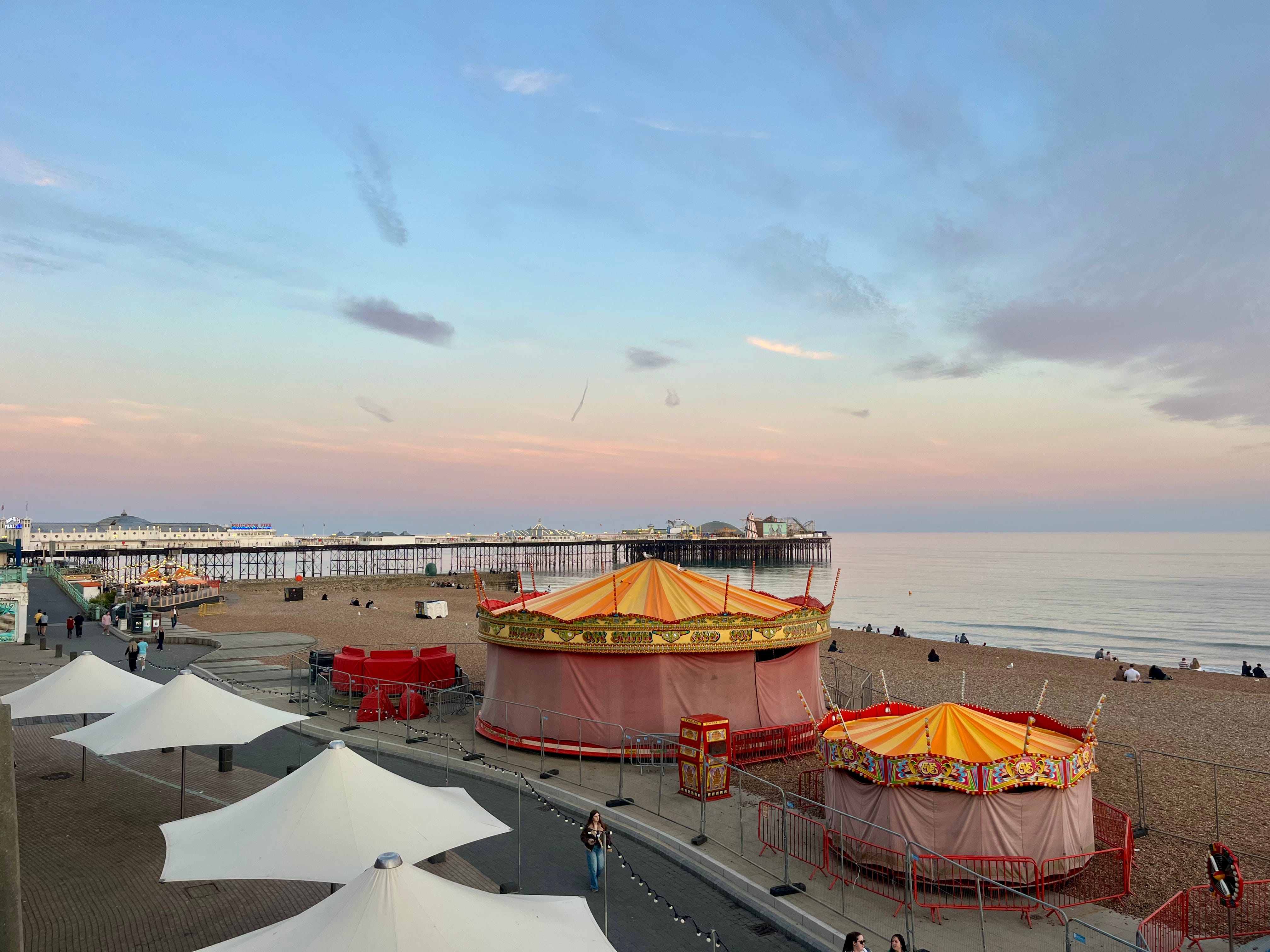
“If we could only, only, only, only go to Brighton…!” When I was fourteen, I was in a musical of Pride and Prejudice. I was a chorus member, and the most enjoyable scene took place in Brighton where Lydia, the youngest Bennet girl, goes to chase her “officer,” Mr. Wickham. Brighton is a seaside, holiday town, and our costumes were garish bathing outfits with brightly coloured bloomers and bonnets. It is in Brighton, of course, where scandal begins: Lydia runs away with Mr. Wickham and is saved from being a ruined woman only by Mr. Darcy bribing Wickham into marrying her. It was not incidental that Austen chose Brighton as the location for this interlude. Brighton has long been a place where people go to get in trouble. In Regency days it was a place to flirt with military officers. In the present day it has the grimmer reputation of being the place that people from London go to have affairs. Even Brighton’s architectural gem, the Royal Pavillion, the elaborate orientalist palace—Indo-Saracenic without, and Chinoiserie within— was built by King George IV because he liked to go to Brighton and party with his pals.
But I’m afraid I went to Brighton for terribly respectable reasons.
I accompanied my husband on a work trip. I do this when I can, provided I can find a cheap ticket and it works out for me to do my own work remotely. So, while he went off each morning to work, I slept in, found a coffee shop to put a few hours of work in, and then set off to see what mischief I could find.
Keep reading with a 7-day free trial
Subscribe to Joy Clarkson to keep reading this post and get 7 days of free access to the full post archives.